If you have owned rental property in Florida over the last few years, you don’t need us to tell...


If you're a landlord or real estate investor in Central Florida, you've probably heard whispers about Florida's SB 264 law: but you might not know exactly how it affects your property management business. Don't worry, we've got you covered. SB 264 restricts who can purchase and own certain Florida real estate—it does not restrict renting or leasing. Understanding the difference helps you stay compliant without overcomplicating your rental operations.
What Exactly Is SB 264?
Florida's Senate Bill 264 is a law that restricts certain foreign nationals from purchasing and owning real estate in the Sunshine State. It targets buyers from what the state calls "countries of concern."
The law has been through the court system and was upheld by federal appeals courts as of November 2025, so it's here to stay. Just as important: SB 264 focuses on purchases and ownership only—not rentals, leases, or occupancy.
Quick clarification: Rentals are allowed
- SB 264 focuses on purchases and ownership of agricultural land and properties within (typically 5-10 mile) buffer zones around military bases and critical infrastructure.
- Covered individuals may rent, lease, and reside in Florida properties, provided they are not acquiring title or ownership.
- The law does not restrict landlords or property managers from leasing to Chinese nationals or others from the list—even within buffer zones.
- Practical tip: Keep your standard tenant screening best practices, but SB 264 does not change rental eligibility. Monitor for future legislative updates and consult legal counsel if you’re unsure.
Which Countries Are on the "Restricted" List?
The law targets buyers from seven specific countries:
- People's Republic of China (faces the strictest restrictions)
- Russian Federation
- Islamic Republic of Iran
- Democratic People's Republic of Korea (North Korea)
- Republic of Cuba
- Venezuelan regime of Nicolás Maduro
- Syrian Arab Republic
Here's the kicker: buyers from China face completely different rules than everyone else on this list. While other foreign nationals from these countries have specific property restrictions, Chinese nationals are essentially banned from buying any real estate in Florida, period.
Three Types of Property Restrictions You Need to Know
1. Agricultural Land Restrictions
Foreign buyers from the countries of concern (except China) can't purchase agricultural land anywhere in Florida. If you're involved in commercial property management that includes farms, ranches, or agricultural operations, remember this for property sales and land acquisitions—it does not affect rentals.
2. Military and Critical Infrastructure Buffer Zones
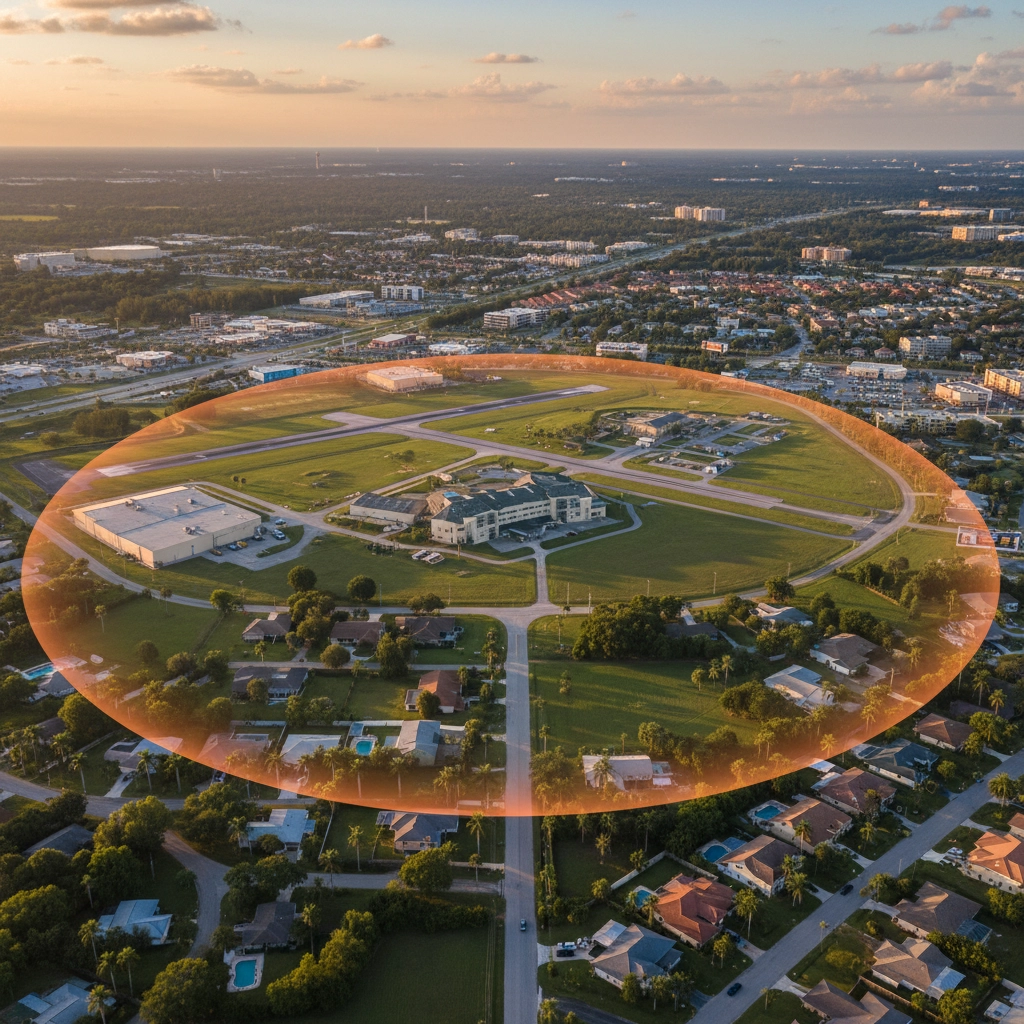
Nobody from these countries can buy property within 10 miles of military installations or critical infrastructure facilities. In Central Florida, this affects areas around places like:
- MacDill Air Force Base (Tampa area)
- Patrick Space Force Base (Brevard County)
- Various airports and power facilities throughout the region
If you're managing residential property management or commercial properties in these zones, extra attention to buyer verification is essential.
3. Complete Ban for Chinese Nationals
Chinese nationals and entities can't buy ANY real property in Florida: residential, commercial, agricultural, you name it. The only exceptions are very limited and specific (which we'll cover next).
Important Exceptions Every Landlord Should Know
Not every foreign buyer is completely locked out. Here are the key exceptions that affect property management solutions:
Properties Owned Before July 2023
If someone bought property before July 1, 2023, they can keep it: but they had to register it with Florida's Department of Economic Opportunity by January 1, 2024. If you're working with foreign property owners who missed this deadline, they could be in violation.
Limited Residential Exception
Foreign buyers with valid non-tourist visas or asylum status can purchase ONE residential property that:
- Doesn't exceed 2 acres
- Isn't within 5 miles of any military installation
This is particularly relevant for residential property management in areas like Orlando, Tampa, or Jacksonville where you might encounter international professionals on work visas.
Corporate Investment Exceptions
Foreign investors can still participate in Florida real estate through:
- Less than 5% ownership in publicly traded companies
- Non-controlling interests in entities managed by non-foreign entities registered with the SEC
What This Means for Your Property Management Business
Tenant Screening: Best Practices Still Apply
SB 264 does not restrict rentals or leases. Do not make rental decisions based on nationality under this law. Keep using your standard, fair screening criteria:
- Income and employment verification
- Rental history and references
- Credit and background checks consistent with applicable laws
If you are selling a property or facilitating a purchase, verify buyer eligibility under SB 264. For rentals, no additional SB 264-specific screening is required.
Enhanced Due Diligence for Sales
Before any property sale, verify your buyer's status and country of origin. The penalties for knowingly selling to restricted buyers are severe: we're talking potential jail time and hefty fines.
Documentation Is Everything
Keep detailed records of all foreign buyer disclosures and verification efforts for sales and acquisitions. Rental agreements are not impacted by SB 264, but good documentation is still smart business.

The Penalty Structure: Why Compliance Matters
The consequences for violating SB 264 are no joke:
For Chinese National Violations:
- Buyers face third-degree felony charges (up to 5 years in prison and $5,000 fine)
- Sellers who knowingly participate face first-degree misdemeanor charges (up to 1 year in prison and $1,000 fine)
For Other Foreign Principal Violations:
- Generally second-degree misdemeanors (up to 60 days imprisonment and $500 fine)
These aren't just slaps on the wrist: they're serious criminal charges that can destroy careers and businesses in real estate investing and property management.
Practical Steps for Central Florida Landlords
Keep Your Tenant Screening Consistent
SB 264 does not change who you can rent to. Avoid nationality-based questions for rental decisions. Focus on objective criteria like income, rental history, and credit/background checks within Fair Housing and local laws.
Know Your Geography
Familiarize yourself with military installations and critical infrastructure in your area. If you manage or plan to sell properties in Central Florida, mapping out these 5-10 mile zones can help you flag higher-risk transactions for buyer verification under SB 264.
Create a Compliance Checklist
Develop a standard checklist for sales and acquisitions that includes:
- Buyer eligibility verification
- Property location assessment (military/infrastructure proximity)
- Documentation of all compliance efforts
- Legal disclosure completion
- Ongoing monitoring for legislative updates
Partner with Professionals
Work with real estate attorneys familiar with SB 264 for complex transactions. The law is still relatively new, and interpretations can vary.

Staying Current with SB 264 Updates
Laws evolve, and SB 264 may see modifications or clarifications over time. Here are reliable resources for staying informed:
- Florida Department of Economic Opportunity website
- Florida Association of Realtors updates
- Local real estate attorney newsletters
- Property management industry publications
How This Affects Different Property Types
Residential Property Management
Single-family homes, condos, and apartment complexes can be affected when it comes to purchases and ownership. The good news: tenants are not restricted by SB 264, so your rental screening process does not change because of this law.
Commercial Property Management
Office buildings, retail spaces, and industrial properties face the same purchase and ownership restrictions, and the stakes are often higher due to property values and potential penalties. Leasing is not restricted by SB 264, but enhanced due diligence is essential for sales or acquisitions.
Mixed-Use Properties
Properties combining residential and commercial elements need careful evaluation for purchases and ownership under both sets of restrictions. Leasing remains unaffected.
Moving Forward with Confidence
SB 264 might seem overwhelming at first, but with proper procedures in place, it doesn't have to disrupt your property management business. And remember: rentals and leases are not restricted by SB 264. The key is building compliance for purchases and ownership into your existing workflows rather than treating it as an add-on.
Remember, this law is designed to protect Florida's real estate market while still allowing legitimate international investment. By following the rules and maintaining good documentation, you can continue serving clients while staying on the right side of the law—and leasing confidently to qualified tenants regardless of nationality.
Need Help Navigating SB 264 Compliance?
At D&D Property Management Solutions, LLC, we understand that keeping up with changing regulations while managing your properties can feel overwhelming. Our team stays current on all Florida real estate laws—including SB 264—so you get clear guidance on what is restricted (purchases and ownership) and what is not (rentals and leases).
Whether you need help with tenant screening best practices, buyer verification for sales and acquisitions, or general property management solutions in Central Florida, we're here to take the hassle out of compliance while protecting your investments.
Have questions about SB 264 and how it affects purchases—not rentals? Contact us today for a friendly, no-pressure consultation. We’ll help you stay compliant, reduce risk, and keep your leasing and management running smoothly.
Visit us at ddpmsol.com to learn more about our comprehensive property management services and how we help Central Florida landlords and investors navigate complex regulations while maximizing their returns.

For a long time, Florida landlords have dealt with a frustrating loophole: tenants who lie their...

If you're a landlord or real estate investor in Central Florida, you've probably heard whispers about Florida's SB 264 law: but you might not know exactly how it affects your property management business. Don't worry, we've got you covered. SB 264 restricts who can purchase and own certain Florida real estate—it does not restrict renting or leasing. Understanding the difference helps you stay compliant without overcomplicating your rental operations.
What Exactly Is SB 264?
Florida's Senate Bill 264 is a law that restricts certain foreign nationals from purchasing and owning real estate in the Sunshine State. It targets buyers from what the state calls "countries of concern."
The law has been through the court system and was upheld by federal appeals courts as of November 2025, so it's here to stay. Just as important: SB 264 focuses on purchases and ownership only—not rentals, leases, or occupancy.
Quick clarification: Rentals are allowed
- SB 264 focuses on purchases and ownership of agricultural land and properties within (typically 5-10 mile) buffer zones around military bases and critical infrastructure.
- Covered individuals may rent, lease, and reside in Florida properties, provided they are not acquiring title or ownership.
- The law does not restrict landlords or property managers from leasing to Chinese nationals or others from the list—even within buffer zones.
- Practical tip: Keep your standard tenant screening best practices, but SB 264 does not change rental eligibility. Monitor for future legislative updates and consult legal counsel if you’re unsure.
Which Countries Are on the "Restricted" List?
The law targets buyers from seven specific countries:
- People's Republic of China (faces the strictest restrictions)
- Russian Federation
- Islamic Republic of Iran
- Democratic People's Republic of Korea (North Korea)
- Republic of Cuba
- Venezuelan regime of Nicolás Maduro
- Syrian Arab Republic
Here's the kicker: buyers from China face completely different rules than everyone else on this list. While other foreign nationals from these countries have specific property restrictions, Chinese nationals are essentially banned from buying any real estate in Florida, period.
Three Types of Property Restrictions You Need to Know
1. Agricultural Land Restrictions
Foreign buyers from the countries of concern (except China) can't purchase agricultural land anywhere in Florida. If you're involved in commercial property management that includes farms, ranches, or agricultural operations, remember this for property sales and land acquisitions—it does not affect rentals.
2. Military and Critical Infrastructure Buffer Zones
Nobody from these countries can buy property within 10 miles of military installations or critical infrastructure facilities. In Central Florida, this affects areas around places like:
- MacDill Air Force Base (Tampa area)
- Patrick Space Force Base (Brevard County)
- Various airports and power facilities throughout the region
If you're managing residential property management or commercial properties in these zones, extra attention to buyer verification is essential.
3. Complete Ban for Chinese Nationals
Chinese nationals and entities can't buy ANY real property in Florida: residential, commercial, agricultural, you name it. The only exceptions are very limited and specific (which we'll cover next).
Important Exceptions Every Landlord Should Know
Not every foreign buyer is completely locked out. Here are the key exceptions that affect property management solutions:
Properties Owned Before July 2023
If someone bought property before July 1, 2023, they can keep it: but they had to register it with Florida's Department of Economic Opportunity by January 1, 2024. If you're working with foreign property owners who missed this deadline, they could be in violation.
Limited Residential Exception
Foreign buyers with valid non-tourist visas or asylum status can purchase ONE residential property that:
- Doesn't exceed 2 acres
- Isn't within 5 miles of any military installation
This is particularly relevant for residential property management in areas like Orlando, Tampa, or Jacksonville where you might encounter international professionals on work visas.
Corporate Investment Exceptions
Foreign investors can still participate in Florida real estate through:
- Less than 5% ownership in publicly traded companies
- Non-controlling interests in entities managed by non-foreign entities registered with the SEC
What This Means for Your Property Management Business
Tenant Screening: Best Practices Still Apply
SB 264 does not restrict rentals or leases. Do not make rental decisions based on nationality under this law. Keep using your standard, fair screening criteria:
- Income and employment verification
- Rental history and references
- Credit and background checks consistent with applicable laws
If you are selling a property or facilitating a purchase, verify buyer eligibility under SB 264. For rentals, no additional SB 264-specific screening is required.
Enhanced Due Diligence for Sales
Before any property sale, verify your buyer's status and country of origin. The penalties for knowingly selling to restricted buyers are severe: we're talking potential jail time and hefty fines.
Documentation Is Everything
Keep detailed records of all foreign buyer disclosures and verification efforts for sales and acquisitions. Rental agreements are not impacted by SB 264, but good documentation is still smart business.
The Penalty Structure: Why Compliance Matters
The consequences for violating SB 264 are no joke:
For Chinese National Violations:
- Buyers face third-degree felony charges (up to 5 years in prison and $5,000 fine)
- Sellers who knowingly participate face first-degree misdemeanor charges (up to 1 year in prison and $1,000 fine)
For Other Foreign Principal Violations:
- Generally second-degree misdemeanors (up to 60 days imprisonment and $500 fine)
These aren't just slaps on the wrist: they're serious criminal charges that can destroy careers and businesses in real estate investing and property management.
Practical Steps for Central Florida Landlords
Keep Your Tenant Screening Consistent
SB 264 does not change who you can rent to. Avoid nationality-based questions for rental decisions. Focus on objective criteria like income, rental history, and credit/background checks within Fair Housing and local laws.
Know Your Geography
Familiarize yourself with military installations and critical infrastructure in your area. If you manage or plan to sell properties in Central Florida, mapping out these 5-10 mile zones can help you flag higher-risk transactions for buyer verification under SB 264.
Create a Compliance Checklist
Develop a standard checklist for sales and acquisitions that includes:
- Buyer eligibility verification
- Property location assessment (military/infrastructure proximity)
- Documentation of all compliance efforts
- Legal disclosure completion
- Ongoing monitoring for legislative updates
Partner with Professionals
Work with real estate attorneys familiar with SB 264 for complex transactions. The law is still relatively new, and interpretations can vary.
Staying Current with SB 264 Updates
Laws evolve, and SB 264 may see modifications or clarifications over time. Here are reliable resources for staying informed:
- Florida Department of Economic Opportunity website
- Florida Association of Realtors updates
- Local real estate attorney newsletters
- Property management industry publications
How This Affects Different Property Types
Residential Property Management
Single-family homes, condos, and apartment complexes can be affected when it comes to purchases and ownership. The good news: tenants are not restricted by SB 264, so your rental screening process does not change because of this law.
Commercial Property Management
Office buildings, retail spaces, and industrial properties face the same purchase and ownership restrictions, and the stakes are often higher due to property values and potential penalties. Leasing is not restricted by SB 264, but enhanced due diligence is essential for sales or acquisitions.
Mixed-Use Properties
Properties combining residential and commercial elements need careful evaluation for purchases and ownership under both sets of restrictions. Leasing remains unaffected.
Moving Forward with Confidence
SB 264 might seem overwhelming at first, but with proper procedures in place, it doesn't have to disrupt your property management business. And remember: rentals and leases are not restricted by SB 264. The key is building compliance for purchases and ownership into your existing workflows rather than treating it as an add-on.
Remember, this law is designed to protect Florida's real estate market while still allowing legitimate international investment. By following the rules and maintaining good documentation, you can continue serving clients while staying on the right side of the law—and leasing confidently to qualified tenants regardless of nationality.
Need Help Navigating SB 264 Compliance?
At D&D Property Management Solutions, LLC, we understand that keeping up with changing regulations while managing your properties can feel overwhelming. Our team stays current on all Florida real estate laws—including SB 264—so you get clear guidance on what is restricted (purchases and ownership) and what is not (rentals and leases).
Whether you need help with tenant screening best practices, buyer verification for sales and acquisitions, or general property management solutions in Central Florida, we're here to take the hassle out of compliance while protecting your investments.
Have questions about SB 264 and how it affects purchases—not rentals? Contact us today for a friendly, no-pressure consultation. We’ll help you stay compliant, reduce risk, and keep your leasing and management running smoothly.
Visit us at ddpmsol.com to learn more about our comprehensive property management services and how we help Central Florida landlords and investors navigate complex regulations while maximizing their returns.
If you have owned rental property in Florida over the last few years, you don’t need us to tell...
For a long time, Florida landlords have dealt with a frustrating loophole: tenants who lie their...